What the Rival Heard
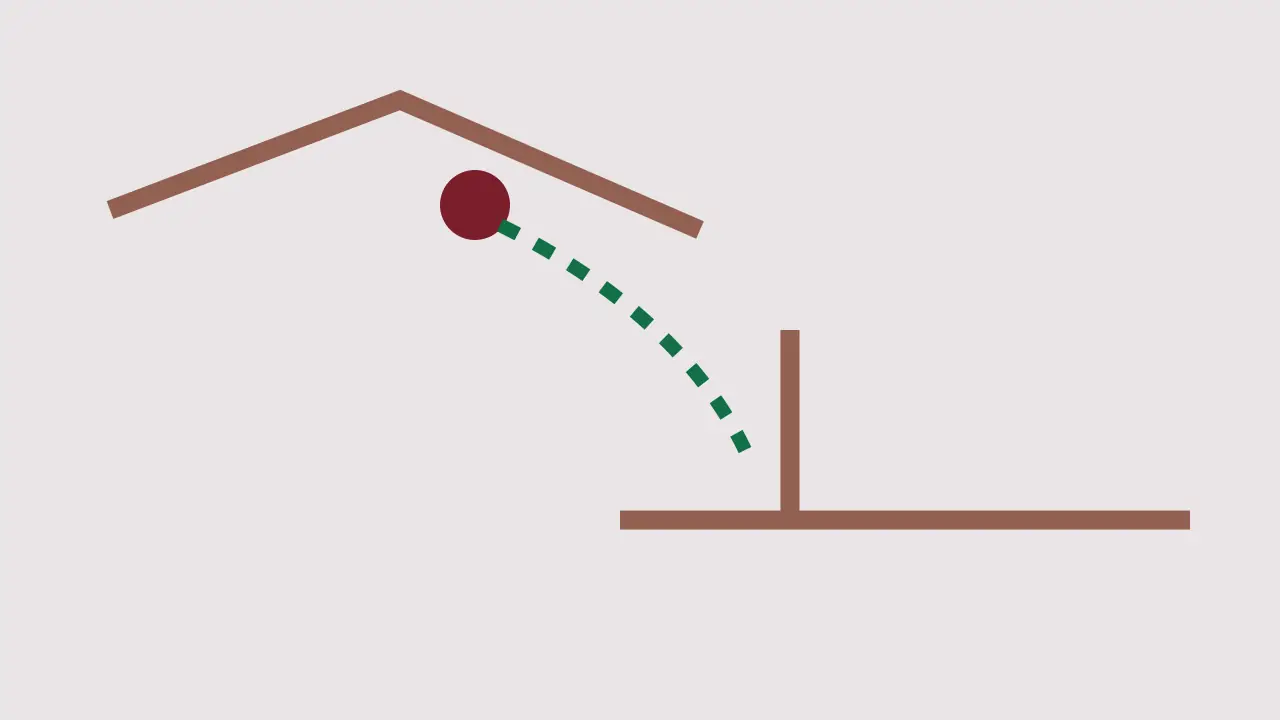
In Heron Roofs, the traveler can land on a paper-covered gallery or on a tiled edge above it. The rival stands below the roofline. From that place, a landing is often heard before its source is visible. We want the response to make sense from the rival’s position and remain clear to the player who took the route. This calls for a review of both views of the same moment.
From the roof
At the start of the first scene, the traveler sees the courtyard and the longer path past its screen. A landing on the tiled edge makes a short sharp sound. The player knows where the sound came from because it happened under the traveler. In the first test, the roof plane stays fixed until the sound finishes. Only then does the camera follow the new viewpoint toward the ground.
Another approach along the gallery offers a softer landing and a different line around the screen. Do not make the landing stronger simply because the player chose a higher ledge. The contrast should follow the material and the place. If both landings trigger a large visual pulse, the player may read the difference as intensity without knowing whether either sound reached the rival.
From below the eave
The rival can hear the tile and can tell it came from above the gallery. The screen still interrupts the view near the path. A small turn towards the roof is all the scene needs to show that the sound arrived. A larger response would imply the rival knew more than the location permits. Keep the closed gate visible during the movement so a player can place the response relative to the route they took.
In the gallery version, the rival might continue watching the gate until the traveler comes around the bend. The quiet arrival can keep the route uncertain without making the rival unresponsive. Compare the gap between the landing and the turn of the rival in the two paths. Players who noticed the signal should be able to explain why the rival reacts earlier under the tiles.
Read silence without hearing sound
Show the consequence visually as well. The rival shifts weight toward the eave after the louder landing. The scene can use a narrow caption with the source and direction of an audible cue. That caption should report information the viewpoint can plausibly provide. Players need to reach the same decision through the illustration and text when sound is unavailable.
Turn on reduced motion during a second test. Keep the still image of the rival after a response and cut the camera move between the rooftop and courtyard. Ask whether the player can identify the earlier landing from the new frame. If the connection vanishes without a long camera move, the result may need a still landmark on both views. A few shared roof tiles or the same tear in the screen can orient the player without making the scene visually noisy.
Use the two viewpoints to revise the rule
For comparison, leave the sound unchanged and move only the screen. The rival’s visible response should still follow a readable relationship between the eave and the gate.
The first prototype will compare what players say the rival heard with the actual direction written in the scene. When an answer is consistently wrong, identify the place where the two views stopped sharing information. Add an explanation only if the geometry and response already work. Hollow Reed tests a related distinction between wind passing through the grove and a localized movement. The Length of a Breath addresses how long a player can wait for evidence before their next decision has changed.